We live in a very symbolic world. Signs and symbols are part of our daily lives. We have safety signs that read: Danger/Hatari, Caution, Warning, Notice, etc. We have Road signs/Traffic Signs. We have directory signposts and advertisement billboards. We have institutional signs like badges and logos. We have cultural symbols some engraved on our skins as cuttings and burn scars. Others have these symbols written and painted on their bodies as Tattoos.
Some symbols are not printed, and neither are they a result of carpentry work but what is involved in what we call the Kinesics. And this the study of communication through body movements, stances, gestures and expressions. We all know that the skin of our face has the way it folds to symbolize a smile and another fold to signify anger.
We are very symbolic beings in all our dealings. We have national symbols like flags and all sorts of emblems, we have political signs that whosoever needs to know our affiliations needs to read and perceive. We have religious symbols and rituals that we so often exercise and they become part of our belief-system construct.
Typical Christians worship an invisible God. This is why they worship and follow him by faith. However, these Christians worship this God in both “Spirit and Truth” (perhaps another paradox), and as they do this, they realize that “there is a physical side of being spiritual” Robert Webber states,
“The nature of faith demands the transformation of supernatural concepts into visible images and symbols.”
That is how Catholics end up with images of saints in the compounds of their cathedrals and that is how Pentecostals end up entangled in the worship of miracles, signs and wonders doctrine. In churches, there are symbols from the dress code, to the painting on the walls, and so it is in Islam and all other eastern religions.
We can, therefore, understand that Symbolism must be appropriated to communicate because, in some incidences, finite language cannot express a supernatural truth.
Evelyn Underhill in her book entitled Worship, notes that
“In every human society which has reached even a rudimentary religious consciousness, worship is given its concrete expression in institutions and in ritual acts: and these institutions and acts become in their turn powerful instruments, whereby the worshipping disposition is taught, stimulated, and maintained.”
She further explains that “these ‘concrete expressions’ have a social quality, a two-fold quality (visible and invisible) and belong to two worlds (sense and spirit).”
Human Beings employ rituals, signs, and symbols in order to incarnate their response to God. In the book of Leviticus, Moses received from the LORD (Lev 23) a mandate regarding what is called “holy convocations” (verse 4). This list included Sabbath, the Passover, the Feast of Unleavened Bread, the Feast of First Fruits, Pentecost, the Feast of Trumpets (Rosh Hashanah, or the New Year), the Day of Atonement (Yom Kippur), the Feast of Huts, Sabbath Year, and the Year of Jubilee. These Feasts connected the worship of God with concrete historical events, provided annual opportunities for theological instruction, and often included a symbolic communal meal.
If you read the Old Testament carefully, you will realize that Judaism was a religion established in symbolism. It is important to notice however that these symbols represent the same principle but mean different things to particular people in particular generations. The symbols of the Old Testament that are interpreted by a new Testament reader to testify the birth, life, ministry and death of Jesus Christ might not necessarily have meant all that to an Old Testament practitioner.
In this is sense, then, symbols are not dynamic but every symbol stands for a principle. Now, whenever you participate in rituals and symbolic activities you must understand the principle that ritual or symbol intends. We all need to go beyond these rituals and signs at some point and appreciate the principle.
For instance in Christianity baptism is a symbol that is conducted by water, but according to Romans 6, the principle that this practical symbol communicates is the death, burial, and resurrection of Jesus Christ. If people are symbolically not dipped into much water but sprinkle or smear on the forehead, are not, therefore, symbolizing the three. It then telling a new follower of Christ, that he must crucify his carnal mind, bury it, and resurrect with a new attitude about his old ways. It does not matter how many times someone is dipped in water if he does not practically go through these stages, he or she is not baptized.
This is the importance and real appreciation of the symbolism of baptism. Every symbol has this life application and once it is missed the symbol ceases to make any sense. As a theologian, I really appreciate the importance of symbolism and really want us to always be careful with what we consider to be our defining symbols and signs. We must be careful because there are symbols constructed to warn us about the danger we are and there are those designed to encourage us. So to me, symbols are useful to our lives not for so many reasons but only two reasons:
- Communication
- Direction
Symbols and signposts according to me are essential because they help us COMMUNICATE much content through few objects. And secondly, they help us with DIRECTIONS. If you don’t know where you are going they point you to that place. However, for you to appreciate these essentialities, you need to critically analyze these symbols and make sure you have understood what they represent and communicate.
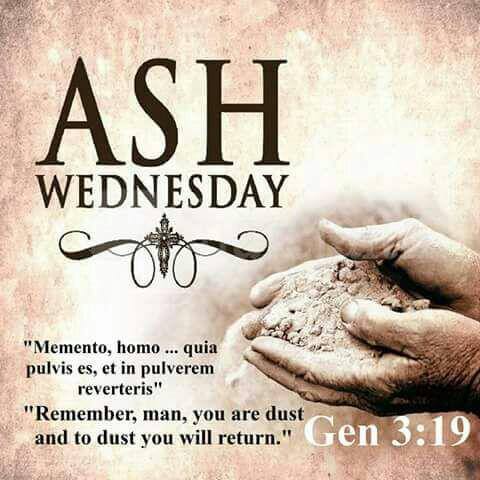
Catholics and all those who believe so, are honouring today as ASH WEDNESDAY, and people will receive paintings of ash on their foreheads. And the justification is that it is a symbol to remind us all that we came from dust and so shall we return to the very dust. Now two things I would like to point out here:
COMMUNICATION: If I came from dust and dust surely in it, I will return. Then what was the use of the cross and Jesus dying on the Cross? What use and significance are the words of Jesus in John 14:1-3: “Do not let your hearts be troubled. Trust in God; trust also in me. In my Father’s house are many rooms; if it were not so, I would have told you. I am going there to prepare a place for you. And if I go and prepare a place for you, I will come back and take you to be with me that you also may be where I am.”
If it is dust that man will eventually return to and stay, why then is it called ASH WEDNESDAY. Don’t you see that the devil is playing symbols of FIRE? YOU WILL BURN TO ASHES. Because seriously if it was about dust, why aren’t the Catholic priests painting dust and not ashes?
It important before we start fancying about devil’s signs and symbols to come to grips with the very symbols we use in our churches. I went to a church where they had the ritual of the Lord’s Table and they used these very leavened bread from the bakery. Now notice that by doing this, they symbolized that in the body of Christ was sin, since Leaven in the Bible signifies sin. I used to belong to a church that emphasized the day at the expense of what the time stood for.
FASTING is also a symbol, we must not always, however, misuse this symbol, it is not about solving our personal problems as the King James version puts it in Mathew 17:21: Howbeit this kind goeth not out but by prayer and fasting. Friends this verse is an addition
Friends this verse is an addition by some untrusted manuscripts that the King James borrows from. Stop stereotyping Bible versions because such theologically incoherent texts are missing. The New Testament was translated from Greek, and in the original Greek that verse is not there, now one wonders where the King James version gets it if the source it translates from is not there.
Fasting is good but not squarely for our good, don’t use hunger to twist the providential hand of God. God does not bless us after we go on hunger strike. Fasting is a symbol of self-denial for the betterment of others around us. This is the biblical principle as it is stated in Isaiah 58:1-12.
Fasting is not saving your food to eat later like Muslims do, or denying yourself your favourite dish but not give it to anyone like the Catholics do. It is instead lifting the quality of the lives of those afflicted among us. It is denying yourself half of your savings and sponsoring that neighbours brilliant child into school.
Finally, I would like to tell you that before you participate in any symbolic occasion or ritual, get to know first what that stands for. I have seen people touching radio and TV sets for healing in the name of a POINT OF CONTACT BLESSING like the bleeding woman touched the robe of Jesus and got healed. I mean this symbolic act could make sense if the preacher in the studio was Jesus himself and not your fellow fallible man known as pastor.
This symbol could have made sense if God was limited in the studio and not right there where you are to touch you. God has not channelled your blessings in Holy Rice, holy water, holy clothes, holy men of God, or in the prophets of this generation. If your pastor is a symbol of Jesus Christ, then walk away from the symbol and go to the Jesus he points you to. Signposts never go where they point us to, so it is a pity when we stay where these symbolic signposts are.
When Jesus performed miracles, he intended that they serve as signs to who he was but not to function as solutions to our materialistic problems. Our interests were never the end in all miracles he performed, but rather Jesus Christ himself and his mission was the end in every miracle.
So if Jesus does wonders in the life of an atheist or a Muslim who rejects him as Lord and saviour in their belief system, it makes no sense and the symbol loses meaning and therefore communicates and directs individuals to the wrong direction. It can be a miracle centre, but if it is not a JESUS POINT, then whoever is there has just packed on a signpost but not with what it signifies.
God bless you.
I invoke Truth, Wisdom and Faith
Pr. I.T.M. WHITE
THE GOSPEL HAWKER
iTiS Well of Worship Fellowship (John 4:24)
(+256-793-822833)
 iTiS Well of Worship Fellowship (John 4:24)
Wow! Symbolism. The symbol and the symbolised! Let me go to the symbolised lest I rest at the sign post to the refugee camp instead of the refugee camp. Let me fall and remain in Jesus Christ who is the reality of all shadows.
Pr. White,please help me on this question I have had for long. Who are these thieves or robbers that Jesus mentions who came before Him as in John 10?
LikeLike