
26th Morning
Numbers 11
Now the people complained about their hardships in the hearing of the LORD, and when he heard them his anger was aroused. Then fire from the LORD burned among them and consumed some of the outskirts of the camp. (Numbers 11:1 NIV).
I hope when you read this verse you see what I see. The people complained to the Lord about their hardships and the responded by burning them up. He burned them up almost 30% of the entire population. The Israelites where approximately 2 Million people and we all can imagine how many people died on this day.
What kind of God destroys and burns up people who are complaining about their hardships? Can you imagine if you worshipped a God who responds with fire? But wait a minute; was fire the best answer to their problems? What was God doing here? Was he solving their hardships or just doing away with those who had problems? What is going on in this text? Are you seeing what am seeing here?
Like I said earlier, the book of Numbers is one about our walk with the Lord. Every lesson that this book will provide will directly or indirectly have something to do with how the Israelites walked with the Lord and how all of us today walking with the same Lord ought to be walking with him. Observe that it does not say that the people “prayed”, but “complained”. They were “complainers”; by which it is evidently meant that there was a feeling in their minds of scarcely expressed dissatisfaction.
There was no sudden outbreak of complaining, but the whispers and looks of discontent. There is no special mention of any particular reason for it but the verse generalizes and says: “Hardships”. It does not say that their manna failed, they were sick or that any hostile army was arrayed against them. Doubtless, the journeying was always wearisome just like it is in our modern world. Life has a lot to be carried.
What these verses are telling us that most of us might actually miss, is that the fire was an equivalent response to the behavior of the people who were in hardships. When they were in pain they did not pray to God but they complained. Complaining is something that you and I do once in a while. Take a moment to consider how many things you complain about in a given day. The weather, public transportation and traffic, your spouse, your kids, your friends, your boss, the movie you just saw and hated, the meal that arrived cold in the restaurant or at home, the sandwich shop or bar attendant that got your order wrong, the elevator that took too long, the reality television show that booted off your favorite contestant, the slow internet, traffic jam, breaking network and the list goes on and on.
If we all were in the Old Testament times we would be burnt daily. Heaven has only one answer to ‘Complaining’ and that is FIRE. But why? I will tell you why. Complaining is not an explanation on how the product is bad but it is one about the producer. When you complain about the state of the affairs of the product, it is a direct attack on the producer himself. Now notice that ever since God took the Israelites out of Egypt, he owns them and they are his to take care of.
The quality of their lives was a reflection of the efficiency of who owns them who was none other than God himself. For them to complain about hardships was a comparison of the services of God to the previous treatment of their former master which displayed God as a failure and Pharaoh as efficient. Complaining, therefore, is total worship to the devil and absolute dissatisfaction in God. The consequence of this is fire.
A long time ago I did a series about complaining, on my former religious radio station and I traced all the ten complaints that the Israelites placed before the Lord. Doing these series helped me discover how I am a complaining individual. And I know am not alone, many people complain and we all complain about many things in life. Some people complain about being single, others complain about their jobs, others it is about being unemployed and more. David complained in Psalm 77:3, “I complained, and my spirit was overwhelmed”; but he soon felt that the root of the evil was in himself. “This,” he adds (ver. 10), “is my infirmity.”
Complaining harbors a negative attitude toward a situation or the people involved. It runs the continuum from griping about the slow driver in front of you to murmuring against the Lord for things He has permitted to come into your life. The common factor in all murmuring is a critical spirit. This kind of grumbling carries the potential for great damage and is a direct violation of God’s will. Complaining is mockery to God and it refutes the sovereignty of God over your situation. If there is anything that God hates it is complaining. For when we complain we divide equally the glory of God and force him share it with Satan.
Complaining is a form of worship that castigates God and elevates Satan. We need to be careful with this problem of complaining for sometimes it is something we do without even knowing we are doing it. It begins in self-justification of assuming we are doing the right thing. We encourage ourselves in the name of let’s not keep quiet about this thing. Let us talk about it, and in the process when we talk and talk, the spirit of complaining takes charge.
Complaining is not a problem solving oriented habit but rather a problem praise practice. Instead of solving the problem, we create another problem around it. We have a problem and that problem makes a problem of us by turning us into complainants but not solutions. Complaining is a spiritual problem, it eats up our spiritual and mental faculties and we cannot resonate right in the situation.
Complaining is denying self-responsibility and attributing your failures to another person or institution. I know of people who never went to school and they are living today but still cursing their parents for not sponsoring them into school. They do not appreciate their parents that at least they did a great job in raising them. However, they are focused on what their parents did not do. Complaining is taking away eyes from what is and has been done to what has not yet been done. Complaining is ingratitude and total selfishness. Complaining is wanting more than you deserve and blackmailing your helpers in the process.
I have heard people accusing the government for their economic problems. People in the house complain about things not fixed and through their complaining, they expect things or actually other people outside their home to come and fix things for them. Complaining is when we know we have to do something but we decide to feel and say something instead. The Israelites did not do something about their need, but chose to feel bitter and curse God and the leadership of Moses instead. This country and actually all over the world, people do not do something about their situation but rather decide to feel and talk much about their governments.
All am telling you right now is that you must stop feeling and start doing. Stop talking about your problems and start acting. The book of Numbers is a book about a walk with God not a talk with him.
We as modern Christians must learn not only to talk the walk but to walk the talk too. Stop being right in what you say and start being right in what you do. When I was campaigning at the University for the Guild President leadership, my campaign slogan was: ACTION BUT NOT REACTION. What I intended by that was that we must learn to act upon our situations instead of reacting. This is what am saying, the Israelites are in a deep problem, it has affected their entire being, instead of detaching themselves from their problem and handle it, they get influenced and inspired by the problem itself and they start feeling it (problem), they start being it (problem), and eventually they start doing it (Problem).
In a sense then, what they are doing is not acting upon the issue, but producing the effects of the problem in their lives. That is what I call reaction. It is producing and displaying the effects of the problem you are undergoing. It is being mastered and utilized by your problem instead of mastering your problem. It can be detected in how much you complain about your issues as compared to how much you work on them. Complaining is a reaction, it is an outburst and an extension of the problem from bad to worse. Complaining and arguing are the sins that breed disunity, it is “selfish ambition” and “vain conceit” rather than the humility that puts the concerns of others ahead of one’s own. Disputing can either mean inward questioning or outward dissension (1Timothy. 2:8).
Paul cautioned the Philippians by these words: Do all things without murmurings and disputings: (Philippians 2:14). Paul’s command not to dispute does not stifle honest discussion of differences on matters of doctrine or practice. Nor does it mean that it is wrong to question church leaders about problem areas. But it does confront our attitude in how we raise questions or disagreements. To dispute means to challenge in a selfish rather than submissive spirit. It means to assert your authority in an attempt to resist God and the leaders He has appointed so that you don’t have to submit to His Word. Satan was disputing when he said to Eve, “Indeed, has God said? You shall not surely die!” (Genesis. 3:1, 4).
As Matthew Henry put it, “God’s commands were given to be obeyed, not to be disputed” (Matthew Henry’s Commentary, on Phil. 2:15, [Revell], p. 734). The Bible, therefore, warns us living today that: Neither murmur ye, as some of them also murmured, and were destroyed of the destroyer. (1Corinthians 10:10). Complaining is display of discontent that is willing not to do something about it but to rather make its environment discontent too. Complaining, therefore, is public incitement against authority. It is a riot and not a praise.
Paul told the Philippians about himself and shared with them his attitude to this world challenges: I am not saying this because I am in need, for I have learned to be content whatever the circumstances. I know what it is to be in need, and I know what it is to have plenty. I have learned the secret of being content in any and every situation, whether well fed or hungry, whether living in plenty or in want. (Philippians 4:11-12). We must learn to have a contended attitude and settle and learn to do something about our situation instead of accusing others due to our problems.
When we murmur, our noise dominates the small still advising voice of the Lord and we cannot hear it. That is why Psalm 106:25 says: But murmured in their tents, [and] hearkened not unto the voice of the LORD. They could not hear the voice of the Lord, neither could they pick the information that God was giving about their situation but they were focused and conceited in their hearts over the problem more than they were to the person that had led them all this long.
We must adopt the attitude of Jesus Christ himself as the prophet foresaw him when he wrote these words: He was oppressed, and he was afflicted, yet he opened not his mouth: he is brought as a lamb to the slaughter, and as a sheep before her shearers is dumb, so he openeth not his mouth. (Isaiah 53:7). Christ taught us that the mere fact that you are right does not work as enough justification to murmur, accuse, judge and complain about the situation. The point is in what you are doing about the situation and not in what you are saying about the situation.
Jesus was silent and he kept his mouth shut as he provided a long-lasting solution to the problem of sin. He never whined how we are sinful and not repentant, or how big the sacrifice was or how undeserving sinners were, he kept quiet and died a vicarious death. The point here is simple and precise: Do all things without murmurings and disputings. I can’t put it any better.
Just after three verses in Numbers chapter 11, see what follows: The rabble with them began to crave other food, and again the Israelites started wailing and said, “If only we had meat to eat! We remember the fish we ate in Egypt at no cost–also the cucumbers, melons, leeks, onions and garlic. But now we have lost our appetite; we never see anything but this manna!” (Numbers 11:4-6). Bad company corrupts good character. In these verses, there are two things: first is the rabble and second is the manna. Let me briefly talk about each.
When the Israelites left Egypt, there were some Egyptians that came with them. Now I have to mention that these people were not Israelites, they were not part of the plan and not part of the mission. They were Egyptians and not slaves. They were not saved from slavery, they were just excited individuals who actually just jumped on a bandwagon. These were friends to the real mission people (The Israelites). To them Canaan was never promised, these Egyptians (read the rabble) were not the main course but just escorts. And it is these that initiate a complaint about diet and when they do, they present it in a comparative manner.
They did not say the manna was bad, but rather compared it to their Egyptian meals. They presented this to the Israelites, the people of the mission, the called and saved of the lord. They challenged their diet and called their attention to the diet of Egypt the land of slavery. The rabble here does exactly the work of the devil by telling the Jews, they deserved better and God was not giving all. The devil told Eve exactly what the Egyptian rabble among the Israelites told them, here it is: “You will not surely die,” the serpent said to the woman. “For God knows that when you eat of it your eyes will be opened, and you will be like God, knowing good and evil.”(Genesis 3:4-5).
Now the rabble is not part of the mission, they have their land which is Egypt. They were never saved from any slavery, in fact, they were the slave masters and relatives to the abusers of the Israelites but here they are advising the Israelites on what is best for them. Woman, who gives you advice about your marriage? Who knows your husband more than you who married him? Who is that who wishes more good than the God who created you and has brought you this far. As you are sitting in that meeting at your company or institution, who is talking and what are they saying?
Some people are not part of the mission, they are just part of the journey. They are with you on your way to your destination but they already have their land and destiny secured. They are not going where you are going, they are just accompanying you. You are looking for Canaan but as for them they already have their Egypt…and that Egypt is what you are running way from, but guess what?!! all their advice and talk is filled with points that try to compare you with what you left. We remember the fish we ate in Egypt at no cost–also the cucumbers, melons, leeks, onions and garlic. The fish, the cucumber, melons, leeks, onions and garlic we ate “in Egypt”.
The point here is not so much on what they ate but from where did they eat all that from? In a sense what the rabble is telling the Israelites is that, if they were in Egypt, they would be eating differently. So the implication is: forget about Canaan and look back to Egypt. Have you ever been in a relationship, where you are judged by the behavior of the Ex-wife/husband of your spouse?
My wife keeps on telling me never to equate or even include her in a sentence which has my ex. I now understand her point. When I look at her in the lens of my past, am then not about what she has done but about what my ex did. In the process am appreciating my absent past and despising my present gift in my wife. Am spilling and splashing it in her face that she is not giving the best. In other words, then, am not going forward with her but dragging her back to my dead oppressive past.
The point is about Egypt not what they ate from there. The rabble does not remind the Israelites about the cost of slavery, the pain, the abuse, they suffered to eat the melons and the fish. The rabble does not tell the Israelites that since they were slaves they never ate all that fresh but it was the left-overs and bin-quality that they could access.
The rabble works around your psychology and confuses to devalue what is yours in comparison to their ideal good. The rabble are people around you who are not going where you are going. The Garden of Eden was never created for speaking serpents but for Eve and Adam, but guess what? Eve listened to the advice of the serpent at the expense of that of the God who put them in there. Israelites listened to the rabble group and rebelled against Moses and his God.
We must learn to stop listening and acting upon the advice of our escorts and all sorts of good company and start listening to the ideas of our leaders. Escorts might have better alternatives from what we have but the constant fact and truth is that those alternatives they provide take us back to where we were but not forward to where we intend to go. Whoever tells you to leave your marriage, is not taking you anywhere forward, but dragging you back to where you left. The serpent was not making this couple any better, but actually bringing them down from the standard God had set them.
Do not listen to the Egyptians at school, they are not there to study, do not listen to the Egyptians at church, they are not there to worship. Do not listen to the better alternatives of the Egyptians at your work place, they are not there to work. Do yourself and don’t listen to the comparisons of the Egyptians in a relationship, there are not in that relationship for any serious progress but just games. Their point is not what you eat and even what you do but rather they are about leading you back to the place of your slavery and pain. They are Egyptians and agents of Egypt not Canaan.
Listen to only those who are where you want to go but not to those who are members of where you left. You cannot overcome adultery by the help of rich and wealthy prostitutes. You cannot fight tribalism by being aggressive and an ardent die-hard of your cultural traditions and institutions. You cannot overcome alcohol by being a regular member at the bar. You will never have an experience with the true Gospel if you stick to the religious guns.
You need to let your past go and focus on your future. It is not about what have and what you don’t, it is about what you do and all that you have failed, it is all about one thing: Where you are? Where you are you? Are you in Jesus Christ, or in a religion? Are in the wilderness on your way to Canaan or in stranded in Egypt? Where are you? That is what matters.
The key word and saying that catches my attention is: “we never see anything but this manna!” Whaaaaaaaaaat!!!!!??? Imagine you have a wife or husband and you are in a country or place which has its standards and the best standard, is known by all the people in that place and you have done your best and have provided the best for your loved one. Then your spouse all of the sudden rabbles and says: “You have done nothing but to provide this”.
The Israelites are not saying they have ever slept hungry, they are not saying there other people in the wilderness enjoying a better diet than they are. Their point is not they are in luck, but rather, the point of complaint is that they are tired of a constant supply in the desert. Imagine!!!. I mean what is this? Do the Israelites understand where they are? Who in the wilderness gets what they get?
The complaint about manna is a complaint that depicts how our psychology works around our spirituality. Look at what they said: We remember the fish we ate in Egypt at no cost–also the cucumbers, melons, leeks, onions and garlic. They started by the words: ‘we remember’ but look at what they remember. It is what they ate. They do not remember the slavery, the beating, the tasks, the stereotype, the abuse, the killing of their children. The torture, the sweat, the bleeding, the diseases, the poverty, the helplessness…I wish I could continue.
All these and more is not included in the ‘we remember’. What features and as far as their memory can collect is the fish, the melons, garlic, etc. but not the exodus, not the miracles that God performed for their rescue, not the providence and protection of God in Goshen. Not the crossing of the red sea, not the cloud before and after them. Not the untorn clothes throughout the wilderness. Not all that God has done but everything assumedly God has not done. Wow!!
This is not merely an issue of ingratitude but a matter of psychology (what we believe and know). It is an issue of perception. Look at what they said: “we never see anything but this manna!” All is done but we never see anything but this manna. God cannot do more, and he hasn’t done enough anyway through his providence in this manna. Both God and his manna are useless and incompatible to us. There is nothing but manna.
Ladies and Gentlemen, this manna can be your present job that you now think does not pay like you deserve. This manna can be your spouse whom you think is below your standard and class. It can be nothing more but peace. Manna can be your single sex children who no longer mean a thing to you just because you want a different sex. Manna could be your rebuking parent who always calls you to the right behavior.
This manna could be your faithfulness at work that has kept you in the same economic status compared to the fellow workers who have played deals and seem to economically thrive better than you. Manna could be you’re not so good looking girlfriend, not so styled like all other girls around. And right now you do not see anything in her but just this manna. Israelites did not see God in the manna, they did not see the hand of God in the manna, they did not see a providence in an impossible place, all they saw was just manna. This is how they looked at things; it was just manna.
Just like we think; it is just breathing until we are put on oxygen do we understand the importance and the cost of our respiratory system. Just like we think it is just manna of waking up until our bedmates become cold next to us in the same bed. Just like we think it is just manna in our over-speeding until we are involved in a car accident. We think it is just manna for our body to function as it does, until something happens then we understand that, it is not just manna but providence from heaven. Your job might be just manna right now, but try the Egypt of unemployment then you will understand that it was not just manna but something more than manna.
When God first resolved to give the Israelites this manna look at what he said: “God said to Moses: ‘See here, I will rain down for them food from heaven, and the people will go out and collect a daily portion every day. Thus I will test them, whether they will follow My Torah or not’” (Exodus 16:5). To the Israelites, it was just manna, but to the God who gave them this manna, it was a test. Oh my God!! Do you see the issue of perception now?
What you see in people and things around is not necessarily what your God sees in them. What you call manna is a test to you, you are being tried to see whether you can manage something better than that manna. Most of us will fail the test because we think it is just manna and yet God our God sees better than mere manna. Let me ask you right now, what is your manna? Why don’t change your vantage point of view and see beyond the manna?
26th Evening
Numbers 12-14, 16
I am going to talk about leadership in these chapters but first, let me pick key lessons from these chapters that we need to understand for our walk with the Lord. The first lesson is in chapter 12. Internal; family opposition. Opposition from outside is alright and can be understood, but there is nothing as dangerous as an enemy within. Miriam and Aaron were siblings to Moses and these were the very people who never liked him. Miriam was the elder sister to Moses, she was older than him to the extent that she had even carried him as an infant. Here she is aggressively opposed and fighting him. Have you ever been in a situation where family members who are supposed to support you are working towards your downfall? I have heard of people who stand for political positions and end-up not getting one single vote in a polling station where their very own family voted from.
The issue of Miriam and Aaron against Moses might not have been hatred as such, but still it was some kind of unfriendly competition. It was a family wrangle, they were in leadership together but Miriam and Aaron were not contended with their offices. They sought the office of their younger brother (Moses). Miriam was the chief prophetess at the camp, and Aaron was the High Priest but still they felt Moses had an upper-hand to them and that caused some discomfort to their lives. They started fighting and pulling him down.
Many dynasties fall due to family wrangles and fights between family members but not any outside force. Brothers start a fight and as they fight, outsiders take advantage and overthrow the entire family. When family members have an issue with your success, they do not directly attack but they do it indirectly. Look at the round-about in the fight of Miriam and Aaron against their younger brother Moses: Miriam and Aaron began to talk against Moses because of his Cushite wife, for he had married a Cushite. (Numbers 12:1). They started with the tribe of the wife of Moses and to an outsider, it would seem like they had a problem with the wife of Moses due to her tribe. They start a fight on clear inappropriate grounds in the life of Moses.
It was culturally unacceptable for an Israelite leader to marry from another tribe, so this brother and sister start from that angle and one would think it is what it is about until you read the next verse|: “Has the LORD spoken only through Moses?” they asked. “Hasn’t he also spoken through us?” And the LORD heard this. (Numbers 12:2). Now let me ask: you have a problem with my wife, what has my relationship and God talking to me and through me has got to do with that? What has the tribe of my wife got to do with my office at my work place? The point here is that, they never had a problem with Zipporah but with Moses himself. Zipporah was just an excuse, they were not targeting the wife of Moses but the office of Moses. This is the nature of family battles.
Recently I was a victim of these family wrangles, after some leadership was inferior to my presence and skeptical to my absence and they worked around my absence to depict it as some sort of anger over some sort of expectations they assumed I had and were not met. One member representatively had to air it out that brother White is bitter because we never bought him a phone, now this member who brought up the phone issue came from the leadership wing that experienced discomfort due to both my presence and absence as well. Now the phone issue is presented to disguise the real issue at stake, and in the process a Moses is presented as the guilty party and has to apologize.
White lost three phones in 2016 and bought four phones in the same year, gave out one, owned and lost three in a row, but someone presents brother White as one whose absence is due to a phone. Can you believe this? This is how the blackmail in family wrangles works. This is what Moses was going through…Zipporah had been the wife of Moses since the Exodus, but all of a sudden, she becomes an issue!
No, it is not about Zipporah but the leadership and relationship of Moses with God. Moses’ wife only seems to be a smokescreen for the real issue: a challenge by Miriam and Aaron to Moses’ role as God’s authoritative spokesman. ”Has the LORD spoken only through Moses?’ they asked. ‘Hasn’t he also spoken through us?”(Numbers 12:2) they said.
We see power struggles throughout the Bible: Saul’s paranoid fear of David, the disciples’ argument about which of them was the greatest, and Simon Magnus who wants to merchandise the Holy Spirit (Acts 8:9-25). It’s not uncommon in churches for people to challenge the authority of the Senior Pastor. Sometimes the challenge is from an associate pastor, sometimes from a long-time member of the church who struggles to retain power in the church and can’t submit to the pastor’s authority.
Richard Foster observes: “Power can destroy or create. The power that destroys demands ascendancy; it demands total control. It destroys relationships; it destroys trust; it destroys dialogue; it destroys integrity.”
Pride is at the root of many struggles for power. “I’m better than you.“, “I deserve this.“, “I want to be perceived as Number One.” The lust for power can become all-consuming. Miriam’s and Aaron’s rebellion was minor compared to what happened next. Their rebellion only affected them and their followers. But the rebellion that occurred on the border of Canaan altered the history of the nation. (I will talk about that when I come to leadership).
As for the case of brother White, it is not about the phone but something else. Look into your family wrangles and analyze the battles and wrangles in there, is it really about what they say it is or something else. Is it about property or blood relations? Some battles are due to the fact that my mother who was a step mother to you abused you in your childhood and you are capitalizing on my mistakes to justify your abuse to me. Some it is due to competition, you are not happy because of my talents, my success, my blessings, etc. and you always find ways to bring me down or pick a borne with me.
When a separated couple fights over the custody of a child, or the welfare facilitation of their child, that child might be but an excuse of another bigger issue. When your spouse praises/defends, or fights the maid (male/female) the issue might be different from what is presented (Ask Mrs. Potiphar).
Another thing that you and I need to learn from these chapters apart from the leadership lesson that I am about to discuss is the problem of a slave mentality. The Israelites have always longed for the day they will reach their destination and here they are at the borders. God tells Moses to go and scout the land and see whether it is everything that God had promised.
You see our God is a covenant God and he is a man (if he is) of his word. Our God is one who delivers upon promise. He is a committed God who vows to fulfill to the dot whatever he said. God does what he says he will do. He said he was going to deliver them from slavery he did, he said he was going to take them walking on dry land through the sea, he did. He said he was going to feed them in the wilderness a place of lack, he did. He said he was going to heal them…he did. Trust me if you applied the same to your life, you will find that whatever the lord said he was going to do to yourself, your family, your house, your workplace, your children, your faith, etc…he did.
If you really know what he said specifically to your life and not just jumping on every promise in the bible, then trust me he did or he is doing or better-off he will do. The only person who didn’t was YOU. Do you know why? Because you have a slave mentality. While it took a week to take the Israelites out of Egypt, it took 40 years and eventually their lives to take the Egyptian mindset out of them. The reason for this was twofold: first it was due to Time and secondly, it was due to Choice.
The Israelites had lived in the Egyptian slavery for four hundred years. In these four generations, almost the entire existing population of Israelites were born under slavery, breast fed by slaves, raised, trained and nurtured by slaves. A mentality is built over time, the more the time, the stronger and more dominant it becomes. They became accustomed and devised some sort of comfort within the confines of slavery.
This what the psychologists and those who do humanities call: Institutionalization. Institutionalization is a state in which a person is so attached to a negative thing that it takes their life to detach them from it. It is when the entire mental faculties are absolutely brainwashed and biased to a particular institution and way of living to the extent that change is impossible.
When individuals are institutionalized they have a programmed and fixed mindset that bears all the pain inflicted to them in the name of serving the institution. These people can be victims of a political party like the Israelites were, they could be victims of a religion or cult, they could be victims of a tribe or ethnic group, it could be a profession. Whatever it is, institutions progressively and over time subject a human being to an idea and some symbolic features that his entire psychology and physiology is tied and engraved in it. This was why it was easy to physically take them out of Egypt but impossible to take Egypt out of them. Slavery was not merely an exercise on their physical bodies but also a practice that determined their core belief system, thinking, and reasoning.
What we see in numbers chapters 13-14 is not that the Israelites do not want the land of Canaan, but rather that they are not tuned to the idea of owning. Their psychological makeup was one engraved and determined to be owned but not to own. Moses sends twelve spies and the majority report (10 of the spies) argues that they should maintain the status quo. The Israelites are encamped at Kadesh-Barnea (Numbers 13:26), a desert town to the south of Canaan.
From there Moses commissions an expedition. “The LORD said to Moses, ‘Send some men to explore the land of Canaan, which I am giving to the Israelites. From each ancestral tribe send one of its leaders. ‘So at the LORD’s command Moses sent them out from the Desert of Paran. All of them were leaders of the Israelites.” (Numbers 13:1-3).
So they traveled the land from south to north a distance of about 250 miles each way and were gone 40 days. On the way back they harvested a massive cluster of grapes in the Valley of Eschol and carried it home on a pole between two people. Of the twelve, only the names of Caleb (tribe of Judah) and Joshua (tribe of Benjamin) are familiar to us today. Their instructions are to conduct surveillance to determine:
- Character of the land and its fruitfulness.
- Strength and numbers of the populations.
- Fortification of towns and cities.
- Forestation
Here is their report: At the end of forty days they returned from exploring the land. They came back to Moses and Aaron and the whole Israelite community at Kadesh in the Desert of Paran. There they reported to them and to the whole assembly and showed them the fruit of the land. They gave Moses this account: “We went into the land to which you sent us, and it does flow with milk and honey! Here is its fruit. But the people who live there are powerful, and the cities are fortified and very large. We even saw descendants of Anak there. The Amalekites live in the Negev; the Hittites, Jebusites and Amorites live in the hill country; and the Canaanites live near the sea and along the Jordan.”
But the men who had gone up with him said, “We can’t attack those people; they are stronger than we are.” And they spread among the Israelites a bad report about the land they had explored. They said, “The land we explored devours those living in it. All the people we saw there are of great size. We saw the Nephilim there (the descendants of Anak come from the Nephilim). We seemed like grasshoppers in our own eyes, and we looked the same to them.” (Numbers 13:25-29, 31-33).
They all agreed on the facts of the report. It was at the point of interpretation that they differed. Caleb (with Joshua) looked with eyes of faith: “We should go up and take possession of the land, for we can certainly do it.” (Numbers 13:31). The ten other spies looked with eyes of unbelief and “spread among the Israelites a bad report about the land they had explored”. When you read this report, again and again, you will not see anything that says that the land is not good, they confirm that, however, according to them (with a slave mentality) it is too good for them-slaves.
We are slaves, the people in there are better than us, their land has made them different people. The best we can be is their servants but not conquering them. We are risking death to attack them for their land, let’s just go back to Egypt and restore the default settings of slavery. This is who we are and that is who they are, we will never be them and they will never be us. Do you see the magnitude of this thinking? The report of the unbelieving spies spread throughout the camp sparking fear, angry grumbling, and weeping. Again they blamed Moses and Aaron — and the Lord — for bringing them out of Egypt. Their only prospect was fed by their fears:
- Men would “fall by the sword“.
- Women and children would be “taken as plunder“
Their conclusion was all-out rebellion: “We should choose a leader and go back to Egypt.” (Numbers 14:4b) Not only were the people prepared to select another leader. They talked of stoning Moses and Aaron (14:10) that is, killing them! They were serious!
The slave mentality is not a mindset that merely thinks impossible but one that is aggressively opposed to opportunities and possibilities. This was not who they were, it was not nature but nurture. A slave mentality is not original with anyone, it is nurtured through time, experience and choice.
The Bible says: “My people have committed two sins: They have forsaken me, the spring of living water, and have dug their own cisterns, broken cisterns that cannot hold water. Is Israel a servant, a slave by birth? Why then has he become plunder? Have you not brought this on yourselves by forsaking the LORD your God when he led you in the way? Now why go to Egypt to drink water from the Shihor? And why go to Assyria to drink water from the River? (Jeremiah 2:13-18).
We all attract a slave mentality from our company, our mentors, our masters, our ethnic groups, our religions etc. When the Israelites left Egypt, the generation that left Egypt had a big problem, they left with a slave mentality and with such a mindset, they were not fit to possess the land, they were not fit for the simple reason that they do not have the right attitude that was needed to dislodge the inhabitants of the land. Only two people Joshua and Caleb had the sort of mentality and attitude required to go in and possess the promise land.
But as for others, their mentality had resolved as follows: If only we had died in Egypt! Or in this desert. Why is the Lord bringing us to this land only to let us fall by the sword? Our wives and children will be taken as plunder. Wouldn’t it be better for us to go back to Egypt? And they said to each other we should choose a leader and go back to Egypt (Numbers 14:2- 4). What a resolution?
It is like a wife who has an abusive husband but she is willing to stay as long as she is driving and being beaten up in a mansion. For the Israelites to resolve to go back to Egypt it demonstrated how they were already defeated, it must be said that they had no stomach to face any new challenge, 400 years in captivity had taken its toll. There was no way the people with this sort of mental attitude could have taken over that land, not with such a mindset; God was not raising an army of weaklings even though he is fighting on their side.
Whatever God was going to do for them, it was going to be implemented through them, they were the principal actors, they were the Lord’s people and his army, and they were expected to be fearless because Jehovah was the one leading them into battle. No Army General would want to lead a bunch of weaklings like these into battle because disgrace rather than honor awaits such a General. No wonder their resolution had a slot for a new leader to lead them back.
They were simply not ready to come into the promise, so more training and lessons were needed, so off into the wilderness the whole nation went to be re-trained in order that they might develop the winner’s mentality and to wean them off losers’ mindset. As a result, it took another  forty years of wandering in the wilderness and the demise of the generation that came out of Egypt and the coming of a new generation who grew up in the wilderness with the right attitude that was needed to possess the land, before the training was completed.
You see this new generation only heard the stories of what happened to their ancestors in Egypt. On their part, they saw firsthand and experienced with their own eyes all that God was doing in their midst, they saw and ate the manna, they saw God fed them with meat in the wilderness, and they saw water come out of the rocks. They saw how God routed the enemies that tried to stop their march towards the promised land. Oh, this new generation saw the glory of God descend in their camp; they saw how God destroyed those who tried to oppose his appointed leaders. They saw the glory and the power of God first hand during those 40 years of wandering in the wilderness.
It left them with a new mindset, a mindset that understood the glory and the power and the ability of their God and how with this powerful mindset they have finally become undefeatable. Now they were ready to possess the land, now they are fit to press forward into the land, God now told Moses to turn towards the promise land. What was achieved during those 40 years of wandering Moses summed up in the following passages (Deuteronomy 4:32-39, 8:1-5).
Joshua and Caleb, the believing spies, pleaded with the people, seeking to build their faith. Look at their mindset and speech pattern: “The land we passed through and explored is exceedingly good. If the LORD is pleased with us, he will lead us into that land, a land flowing with milk and honey, and will give it to us. Only do not rebel against the LORD. And do not be afraid of the people of the land, because we will swallow them up. Their protection is gone, but the LORD is with us. Do not be afraid of them.” (Numbers 14:7-9)
Observe their positive faith:
- The Lord will lead us into the land. This is Yahweh’s promise and he will fulfill it.
- We will consume the people. “We will swallow them up” (NIV), “they are no more than bread for us“
- Their protection has been removed. Their fortifications and weaponry are not sufficient.
- The Lord is with us. This theme ricochets throughout the Old and New Testaments.18
Observe also their warnings:
- Do not rebel.
- Do not be afraid of the people of the land.
It is important to see the close relationship between unbelief, fear, and rebellion. When we believe our circumstances more than we believe God’s promises, then we are afraid to follow God, and, indeed, rebel against him and go our own way. Christian leaders will do well to minister to people’s fears with faith, if they desire to lead them forward to God’s plan for them and for a local congregation.
In this case, however, Joshua and Caleb were not able to stem the tide of fear, and it swept across the people. Caleb and Joshua had suffered the same slave-mentality and just like the ten spies they had been groomed and nurtured by the same circumstances. However, the difference was in their capacity to choose otherwise. They certainly did not fully understand what it meant, but they dared to choose otherwise.
Our thinking can be restructured by the choices we make. The choice of schools we go to, the choice of churches we go, the choices of friends and companies we keep. Your thinking and ignorance will seriously be affected by the music and movies you watch. Sometimes one’s choice does not require all information about the new venture but all you need is to fully know the present circumstance and if you do not like it, you choose against it. It doesn’t matter whether you know where you are running to as long as you know what you are running away from.
This was the difference between the mindset of Caleb and Joshua and the other ten other slaves. The ten knew what they did not want but they needed 100% information of the alternative before they decided to leave what was hurting. Meanwhile, the other two slaves decided to let go of what they know hurts and jumped into what they never heard all information about.
This is not taking risks but it is called FAITH. The two spies had FAITH while the other ten slaves had FEAR. Those with FAITH had a prosperity mentality while those with FEAR harbored and nourished a slave mentality. Slaves are engineered, designed and fixed to fear. They fear everything, both what they know and what they don’t.
Now let us talk about Leadership.
Rabbi Evans wrote these words: “Moses was the first great Israelite prophet. He is also one of the greatest leaders in human history. Yet, had God read Moses’ resume before hiring him, God would not have likely been impressed. Moses was born a slave. He has a stutter and a temper. And the only work he did before God called him was caring for his father-in-law’s sheep. Yet, Moses goes on to challenge the world’s most powerful ruler, and lead a people from oppression to freedom. He brings down the Torah and teaches the people the Ten Commandments. He is the protagonist of a story told around the world to this very day.”
I agree with the Rabbi. If you read the Old Testament and the story of the Israelites, you will realize that Moses is the best model of Leadership. I found two interesting quotes that attempt to define or at least give an insight on what leadership is and here are they:
Leaders are people who do the right thing; managers are people who do things right. – Professor Warren G. Bennis.
This quote tells us that leadership is about doing the right thing, how a leader comes to a conclusion that this is the right thing is subject to scrutiny. Another quote is this:
Leadership is the art of getting someone else to do something you want done because he wants to do it. – Dwight D. Eisenhower.
This teaches us that leadership is both influence and empowering individuals to do and be. Kevin Kruse tells us what leadership is not:
- Leadership has nothing to do with seniority or one’s position in the hierarchy of a company. Too many talk about a company’s leadership referring to the senior most executives in the organization. They are just that, senior executives. Leadership doesn’t automatically happen when you reach a certain pay grade. Hopefully, you find it there, but there are no guarantees.
- Leadership has nothing to do with titles. Similar to the point above, just because you have a C-level title, doesn’t automatically make you a “leader.” In all of my talks, I stress the fact that you don’t need a title to lead. In fact, you can be a leader in your place of worship, your neighborhood, in your family, all without having a title.
- Leadership has nothing to do with personal attributes. Say the word “leader” and most people think of a domineering, take-charge charismatic individual. We often think of icons from history like General Patton or President Lincoln. But leadership isn’t an adjective. We don’t need extroverted charismatic traits to practice leadership. And those with charisma don’t automatically lead.
- Leadership isn’t management. This is the big one. Leadership and management are not synonymous. You have 15 people in your down line and P&L responsibility? Good for you, hopefully, you are a good manager. Good management is needed. Managers need to plan, measure, monitor, coordinate, solve, hire, fire, and so many other things. Typically, managers manage things. Leaders lead people.
Professor Christopher M. Pietruszkiewicz, J.D who is a Professor of Law says: “I define leadership as setting broad agendas to transform an organization, about seeing the big picture with defined outcomes and goals, and working with others to determine how we can advance our mission. We don’t produce widgets; we help students to think about how to be significant in the world, and give them the tools and insight to solve problems that may not yet exist. Higher education is about people, and leadership is about surrounding yourself with talented people, building teams, empowering them to identify obstacles that have an impact on accomplishing organizational goals, and providing them with the freedom to produce creative and innovative solutions. Leadership also is about encouraging independent able — then celebrating successes organizationally and individually. Finally, leadership has legitimacy only with integrity. The simple guiding principle is to do the right thing for the right reason.”
Leadership is an exercise both in the human world and in the animal world. The reason for this is because both the human and animal worlds have two constant elements: Challenge and Response. In both these worlds, there is always a problem that needs to be solved. These challenges might range from community preservation (morality, cultural norms, and language), progress and growth of that community/social group, individual desires, needs and wants, resource mobilization and distribution, genetic reproduction and bloodline extension for species preservation. These can all be categorized under what I call the challenge. Leadership is or ought to be a response to the existing challenges that feature whenever conscience beings gather or wherever they are.
Let me look at this from the animal world point of view. In the animal world, leadership is a response to a challenge that entails three things: 1. Sex, 2. Food and 3. Territory. In some animal groups and species, a leader is responsible for all the three but in some, there is division of labor. For instance, in a pride of lions, a dominant alpha male is always the leader of the pride but his responsibilities do not entail planning food for the entire pride. This is a responsibility for the one chief-experienced lioness. The alpha male is there to help if it wants when the lioness scouts a huge prey like a bull buffalo.
According to Ranganathan: “The physical strength and aggression of the alpha male is what the determining factor of his dominance. The protection and security enjoyed by other members of the pride at the behest of the alpha lion is what keeps the pride together. But the leadership of the alpha male is always under threat. During breeding season, the dominant male lions from other prides challenge the leadership domain and sometimes may win also. Once it wins, the new one takes control of the entire pride. To establish its authority, the new ‘chief’ annihilates all the cubs in pride in order to push the females to heat cycle so that he can have his mating.
Leadership of the dominant lion in a pride is not stable and inspirational. Mere physical strength is what defines the dominance. Corollary to this, some leaders in corporate behave exactly the same way as the new lion chief of the pride. They terminate the service of most of the existing employees, declaring them to be useless and archaic. When one corporate is taken over by other, this situation becomes most inevitable.” In the human world, we have politically seen this.
In the elephant world, bulls fight for sex and seldom for territory given the fact that they are mobile mammals. But the leader of the herd is always a female. It is not just any female though but what determines leadership in the elephant world are two things: age and experience. It is age because all the young will look upon you for references purposes. It is experience because you are the storehouse of answers and responses to questions from the inexperienced faced with circumstances of where food and water is, where is danger and which direction is wind likely to strike?
This is some sort of chiefdoms in the human world. The elders are the leaders and they qualify to be just because of their age and their experience. In the beehive, the queen (leader) remains only for the purpose of procreation. Different bees are entrusted with different responsibilities. There is no conflict in the division of labor. Highly organized and very systematic. When the queen dies, a new queen is developed by rest of the members. In the swarm of bees, only one queen is entertained. If the division of labor is well defined, this type of hierarchy may go well for corporate. Their concern is about procreation and multiplication and all work towards that.
The lessons in the animal world cannot be exhausted here but the point that I wanted to raise here is that leadership is always a response to an existing challenge. And the effectiveness and efficiency of that response determines leadership. Allow me also to point out that; there is nothing like bad leadership, it is either leadership or no leadership at all. It is easier to form leadership in the animal world than it is in the human world.
According to me this is because in the animal world, the needs are fixed but in the human world the needs are dynamic, progressive and very circumstantial. Because of this truth, that is why man is a political animal who feeds, survives and thrives on deception. When a leader fails to understand this truth he/she might end up doing the ten mistakes below:

A leader must understand the people he leads he needs to work on himself first and find out how healthy he is in order to help others. And this health is all-round as this chart display:

A leader must be physically, spiritually, vocationally, socially, intellectually and emotionally healthy. This is important because the challenges that his leadership respond to stem from those six areas. And those areas in the human world are dynamic, progressive and circumstantial. So every leader must start with discovering himself and utilizing that in response to the needs of others but not himself as it is in modern politics. So for one to be a good leader he must consistently do two things to himself: 1. he must do a self-recognition and 2. he must do a self-regulation. And all this he should do individually (Self) and corporately (Social). The chart below explains it better:
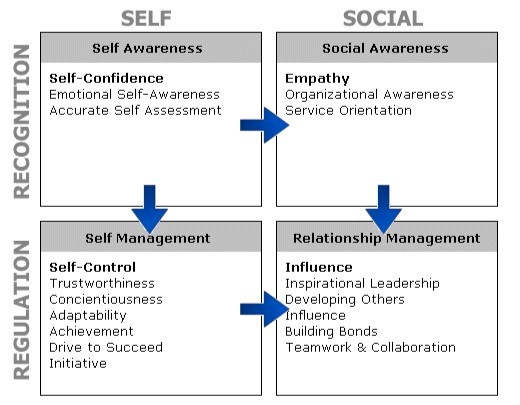
According to me, there is no best leadership style. Because I have argued that leading human beings is circumstantial and my definition of leadership is that it is a response. To me then, a response can only be best specifically. We cannot fix a response given the variation of our circumstances. For that matter, I think that is why there are many definitions of leadership and they all could be right.
However, there are three leadership styles and these are: 1. Autocratic, 2. Laissez-Faire and 3.Democratic. I know there might be many more theories of leadership and other hypothetical styles of leadership but as far as am concerned there are only three leadership styles.
Autocratic form of leadership is what we know in the classic world as theocratic and monarchical. Again it is the one known as Transformational mode of leadership. This was the leadership style of Moses at huge scale. It is again the same leadership style that will take charge of the Israelites after they reach Canaan and start claiming for political leaders in the form of kings (monarchical) in the days of the Judges and Samuel. It the democratic style of leadership that is again known as Transactional leadership.
In Autocratic leadership, a leader tells his constituency what to do and the constituency does not give suggestions. What a leader says, is not merely a law but a decree. A leader says do X and that is all. It is after a leader sees what needs to be transformed and he implements that exactly. Autocracy has no problem if the leader is physically, spiritually, vocationally, socially, intellectually and emotionally healthy. The problem comes in when he is not. The theocratic leadership of God is the best if and if only God is the leader. This is why through the prophets, he was opposed to the Israelite demand of a fellow fallible sinner to be their king.
In Democratic leadership, a leader negotiates a decision. He tells the constituency about X and the public can also suggest Y as an alternate decision and both parties negotiate this through its established instruments. It is this negotiation that is known as a: Transaction.
The third mode of leadership is one that is known as Laissez-Faire. The other name of this leadership style is Delegative Leadership. In this leadership style, it is when a leader lets the constituency to do as it sees fit. It is a leadership style in which leaders are hands-off and allow group members to make the decisions. Researchers have found that this is generally the leadership style that leads to the lowest productivity among group members. The Laissez-Faire leadership is characterized by:
- Very little guidance from leaders.
- Complete freedom for followers to make decisions.
- Leaders provide the tools and resources needed.
- Group members are expected to solve problems on their own.
- Power is handed over to followers, yet leaders still take responsibility for the groups decisions and actions
I live in a country whose constitution reads: The power belongs to the people. Whether this is Laissez-Faire or not it is upon the thinkers. All in all what we see here is a danger of this mode of leadership. It is not healthy for leadership to assume that the people can appoint a leader but still lead themselves. Now that I have discussed the three styles of leadership that I know and emphasized my definition of leadership that it is a response let me exhibit all that in a chart below:
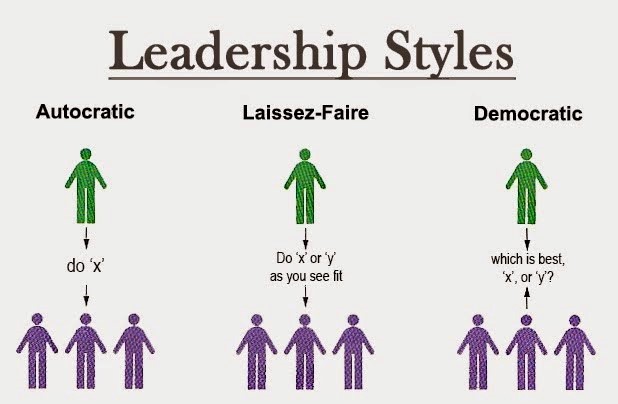
I want you to focus your attention on the arrows. With the Autocratic and Laissez-Faire leadership, the arrows are descending. To imply that the orders come from above and that is why these styles of leadership are both transformational and delagational. But when it comes to the democratic style of leadership, the arrows are both descending and ascending to demonstrate how in that mode of leadership, decisions are negotiated. This is why this leadership is transactional. There is a transaction conducted between a leader and those he leads in the decision-making process. This is my approach to training and explaining what leadership is. All I can say about leadership can only use what I have said so far as a spring board.
Leadership is Responsibility and by responsibility, I intend the ability to respond. As the word itself says: Respons-ability. To be a leader is to have an ability to come up with a response to a given situation. That is why to me, leadership is a response. And because it is a response, that is why I agree with Bruce Woodcock that the responsibilities of a leader can be categorized under these ten tenets:
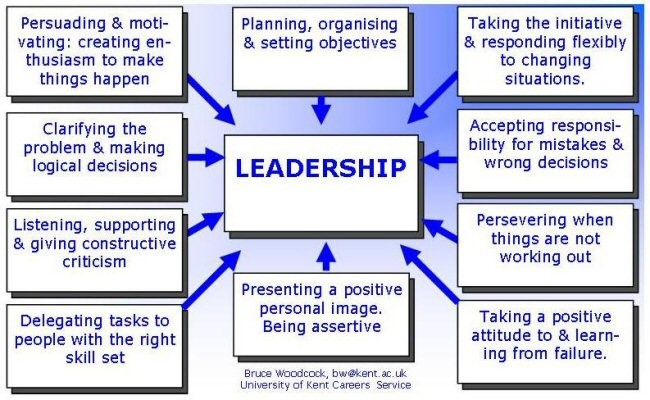
I intimated earlier that there is no standard and constant style of leadership in the human world. Human beings have no fixed needs like other animals have and that is why they cannot have a fixed and constant standard style of leadership. Since, to me, leadership is a response, we must initiate adaptability accordingly. When we look at Moses, we will understand that, his leadership style was adaptive and responsive.
The fundamental difference between the books of Exodus and Numbers is that in Exodus, Moses is called on to exercise technical leadership. The Israelites are enslaved? God sends signs and wonders, ten plagues, and the Israelites go free. They need to escape from Pharaoh’s chariots? Moses lifts his staff and God divides the sea. They are hungry? God sends manna from heaven. Thirsty? God sends water from a rock. When they have a problem, the leader, Moses – together with God – provides the solution. The people do not have to exert themselves at all.
In the book of Numbers, however, the equation has changed. The Israelites have completed the first part of their journey. They have left Egypt, reached Sinai, and made a covenant with God. Now they are on their way to the Promised Land. Moses’s role is now different. Instead of providing technical leadership, he has to provide adaptive leadership. Adaptive leadership is a leadership that responds to the existing situation. He has to get the people to change, to exercise responsibility, to learn to do things for themselves while trusting in God instead of relying on God to do things for them.
That is why I have argued that the book of Numbers is a book about the walk with God. Responsive or Adaptive leadership is called for when the world is changing, circumstances are no longer what they were, and what once worked works no more. There is no quick fix, no pill, no simple following of instructions. We have to change. The leader cannot do it for us.
Adaptive or responsive leadership is intensely difficult. People (followers and leaders) resist change. They erect barriers against it. One is denial. A second is anger. A third is blame. Look at what the constituency is saying: “If only we had died by the Lord’s hand in Egypt! There we sat around pots of meat and ate all the food we wanted, but you have brought us out into this desert to starve this entire assembly to death” (Exodus 16:3).
Many times, before, Moses had faced this kind of complaint from the people. There are several such instances in the book of Exodus, including a very similar one. Now you may think that this mindset is exclusive with the constituency but watch what the leader at some point says: “Why have you brought this trouble on your servant? What have I done to displease you that you put the burden of all these people on me? Did I conceive all these people? Did I give them birth? … I cannot carry all these people by myself; the burden is too heavy for me. If this is how you are going to treat me, please go ahead and kill me – if I have found favor in your eyes – and do not let me face my own ruin” (Numbers 11:11-15).
In the chapters that follow, Moses seems to lack the unshakable determination he had in Exodus. At times, as in the episode of the spies, he seems surprisingly passive, leaving it to others to fight the battle. At others, he seems to lose control and becomes angry, something a leader should not do. Something has changed, but what? Why the breakdown, the burnout, the despair? I will tell you why. Moses the former herdsman, the man who has been a leader to a constituency with fixed needs (animals) is now a leader of a different constituency that has dynamic, progressive and circumstantial needs (people).
This is not one of Moses’ greatest leadership moments. He blames God for the problems. They’re your problems, he tells God. Why do I have to deal with your problem people? At the root of Moses’ misery, however, are two elements:
- The burden of leadership is too heavy for him.
- He knows he is inadequate to supply what the people are demanding.
Moses is at his wits end. Unless God backs him up, he can’t “face (his) own ruin.” God answers Moses in two ways:
- God puts some of his Spirit on 70 of Israel’s elders (Numbers 11:24-30)
- God promises abundant meat (Numbers 11:31-34)
God’s promise of a month’s supply of meat is so huge even Moses can’t believe it. (Numbers 11:21-22). Moses’ vision of God is too small! Then God rebukes Moses and tells him to tell the people what he said, even if he can’t envision it! “The LORD answered Moses, ‘Is the LORD’s arm too short? You will now see whether or not what I say will come true for you.’ So Moses went out and told the people what the LORD had said.” (Numbers 11:23-24)
Circumstantial leadership is emotionally draining in the extreme when you are dealing with people. Those who exercise such leadership like Moses are never appreciated in their existence but after their death. Their greatness is posthumous. Only in retrospect are they seen by their own people as heroes. Moses at the time of his leadership, he was seen by many as a threat to the status quo, to all that is comfortingly familiar. Moses was a threat to Pharaoh and other organized states but he was also a threat to his very own constituency.
Take for example the resistance his leadership suffers under Korah, someone who comes from his immediate family. While the leadership of Moses suffered hardships, the final leadership challenge of this troubled period in Moses’ ministry came from members of his own tribe and from a coalition of leaders from many tribes in Numbers 16.
“Korah … the son of Levi, and certain Reubenites … became insolent and rose up against Moses. With them were 250 Israelite men, well-known community leaders who had been appointed members of the council. They came as a group to oppose Moses and Aaron and said to them, ‘You have gone too far! The whole community is holy, every one of them, and the LORD is with them. Why then do you set yourselves above the LORD’s assembly?’” (Numbers 16:1-3).
The issue was who could serve as priests. Korah and his clan members were Levites, but not priests. The Levites had various duties that they fulfilled regarding the tabernacle. For example, as a Kohathite, descendants of Levi’s son Kohath, Korah’s clan was “… Responsible for the care of the sanctuary…. for the care of the ark, the table, the lampstand, the altars, the articles of the sanctuary used in ministering, the curtain, and everything related to their use.” (Numbers 3:28, 31).
When it came time for the camp to move, this clan packed and carried the most holy things. But now the Levites, whom Korah represented, wanted to have the status of priests, to offer sacrifices as was only permitted to the priests, the sons of Aaron (who himself was a descendant of Levi). Moses says, “Now listen, you Levites! Isn’t it enough for you that the God of Israel has separated you from the rest of the Israelite community and brought you near himself to do the work at the LORD’s tabernacle and to stand before the community and minister to them? He has brought you and all your fellow Levites near himself, but now you are trying to get the priesthood too.” (Numbers 16:8-10).
This leadership response was not sufficient to the disgruntled group and here is what they had to say: “Korah and his coalition “… came as a group to oppose Moses and Aaron and said to them, ‘You have gone too far! The whole community is holy, every one of them, and the LORD is with them. Why then do you set yourselves above the LORD’s assembly?” (Numbers 16:3)
Moses and Aaron are being accused of pride, of setting themselves above the people. Furthermore, Korah and his followers are questioning Moses’ statements that only the priests are permitted to minister with regard to the most holy things — offering sacrifices and burning incense before the Lord. Korah argued. “The whole community is holy, every one of them, and the LORD is with them.” (Numbers 16:3).
What Korah asserted was ideally true, so far as it went. And this is the problem with the lack of clarity of communication in leadership business. Indeed, the Lord had declared the whole people set apart to him. “You will be for me a kingdom of priests and a holy nation.” (Exodus 19:6). And the promise of the Lord’s presence was made for the entire people as well (Exodus 33:14). The problem was that Korah was quoting the selected passages that made his point, but was ignoring the detailed instructions that the Lord had spoken through Moses regarding the distinctions between the priests and Levites (Exodus 29:8-9, 41, 44; Leviticus 8).
He was questioning that Moses had actually spoken God’s words accurately. But, since Moses had written God’s words accurately, Korah and his coalition were questioning God himself. This was a rebellion against God! Moses realizes that Korah’s company is speaking blasphemy against God — and would bring a terrible judgment on many. Moses fell facedown to humble himself before the Lord in the face of judgment. Then he said to Korah: “It is against the LORD that you and all your followers have banded together. Who is Aaron that you should grumble against him?” (Numbers 16:11). When Moses summons the Reubenite leaders of the coalition, Dathan and Abiram, they refuse to come.
Perhaps their motive was that they felt slighted in leadership, even though Reuben had been Jacob’s firstborn (Genesis 49:3-4). They may have wanted a greater role in leadership, we’re just not sure. Nevertheless, they accuse Moses of:
- Seeking to kill the people in the desert.
- Lording it over the people.
- Failing to lead the people into the abundance of Canaan.
- Punishing rebellion with torture (Numbers 16:13-14).
Moses commands each of 250 rebels in the coalition to bring a censer with fire and incense to present before the Lord in the morning. “When Korah had gathered all his followers in opposition to them at the entrance to the Tent of Meeting, the glory of the LORD appeared to the entire assembly.” (Numbers 16:20) Moses and Aaron immediately prostrate themselves before the Lord and intercede loudly for the people of Israel to avert judgment upon all: “O God, God of the spirits of all mankind, will you be angry with the entire assembly when only one man sins?” (Numbers 16:22). What a leader!!!
He did not order for their arrest or their excommunication, but he interceded for them. The earth then splits apart and swallows Korah and all his men — with their households — and then closes over them. The 250 leaders who are offering incense before the Lord are struck with “fire from the Lord” and consumed. The Israelites flee in terror, but the next day the whole Israelite community grumbles against Moses and Aaron and accuses them: “You have killed the LORD’s people” (Numbers 16:41). Oh God!
The rebellion that had begun with Korah and 250 leaders had now infected the entire people. This the challenge in leading people. It is easier to lead animals than to lead people. The glory of the Lord appears again, and with it, impending judgment. This is going to continue in the book of Deuteronomy and that of Joshua, and again those books (Kings 1&2 and Chronicles 1&2) that record the monarchical periods of Israel.
Moses remains the greatest leader the Jewish people have ever known, the man who almost single-handedly shaped the Israelites into a nation that never gave up or gave way to despair. But all this was due to the fact that, Moses looked at leadership, not as a fixed directive, but an adaptive one which had the ability to accordingly respond to the existing challenge.
As Christians, we may ask: What made him such an outstanding leader? And from one perspective, we might simply answer: God. God chose Moses. God guided Moses. God stood behind Moses. This is all true. But Moses also knew how to lead. Moses displayed qualities that impressed those who did not believe in the God he represented. In other words, Moses’ leadership displayed universal truths and insights. He can teach people of all faiths. Moses was the first great Israelite prophet. He is also one of the greatest leaders in human history.
Moses was born a slave but raised a prince in the palace. He had a stutter and a temper. And the only work he did before God called him was caring for his father-in-law’s sheep. Yet, Moses goes on to challenge the world’s most powerful ruler, and lead a people from oppression to freedom. He brings down the Torah and teaches the people the Ten Commandments. Moses was a leader and Leaders help themselves and others to do the right things. They set direction, build an inspiring vision, and create something new. Leadership is about mapping out where you need to go to “win” as a team or an organization; and it is dynamic, exciting, and inspiring.
Yet, while leaders set the direction, they must also use management skills to guide their people to the right destination, in a smooth and efficient way. But to do this, a leader must be truthful and intentionally exercising humility. Moses was honest and he was humble. Godly leaders must possess truth, not just influence. Perhaps you’ve been in congregations that select their leaders by whatever warm bodies can be found to fill the positions required by the bylaws. What a huge mistake! The leaders must be people of faith and truth or the result may be tragic for the congregation!
Leaders need to be “full of the Holy Spirit and of wisdom” (Acts 6:3) and, like Barnabas, “full of the Holy Spirit and faith” (Acts 11:24). For those who praise influence, beauty, background or talent over truth in choosing leaders must look at the scenario of the 12 spies. Each of the 12 spies was a recognized leader in his tribe. Each saw the same surveillance data, but they came to different conclusions as they analyzed the data. Joshua and Caleb saw the data through the truth-lens of God’s promises. The remaining 10 saw the data through the influence-blinders that inspired fear in the majority.
Many leadership teachers emphasize influence. In fact am told politics is based on two principles: 1. influence and 2. advantage. It is about who gets what and why. This cannot be divine leadership but mere propaganda and selfish agenda setting geared to the individual, not corporate goal and good. The majority doesn’t necessarily discern God’s will. Though the surveillance team’s “vote” was 10-2 in favor of abandoning the conquest, the majority was wrong.
We must seek God for his will, not just count heads! Leaders have a strong influence on the people who respect them. And this respect is in most cases culturally oriented but not a meritorious one. Here, the influence of the ten prevailed not only on their tribes, but on an entire nation to its detriment. Influence doesn’t always work positively.
Rabbi Evan Moffic did a presentation in which he used Moses as a case study and listed 20 things that every leader should learn from the leadership of Moses. Allow me to conclude this study by sharing these.
- Take a Stand
Moses is raised in Pharaoh’s palace. He is a prince of Egypt. According to the Talmud, he doesn’t leave the palace until age 15. But when he leaves, he sees slave-masters beating his fellow Israelites. His illusions are shattered. He knows all is not right with the world. He decides he cannot remain who he was. He needs to challenge slavery. He needs to take a stand against injustice. This is the first major test of Moses’ leadership. He is, to use a different religious idea, “born again.” The Prince of Egypt” because an Israelite again. All leaders, as my teacher Howard Haas says, “Need to be born again.” What experiences led you to become a leader? Have you been born again? I (Isaiah White) always tell people that: Real leaders never take sides, they take a stand.
- Persist
When Moses first confronts Pharaoh, and tells him to “Let my people go,” Pharaoh laughs. He brushes Moses off. This pattern repeats several times. Moses could easily have given up. He faced difficult odds to begin with. Who was this lowly shepherd to challenge the Pharaoh, the most powerful ruler on earth? But Moses persists. Behind his persistence was faith. He knew the justness of his cause. He knew, as the Chicago Blues Brothers’ later put it, that he was “on a mission from God.” What keeps you going? What helps you persist in the face of disappointment?
- Find Your Core
Moses is passionate about justice. It awakens him to empathy with his fellow Israelites. It leads him to act to defend them. It leads him to defend the helpless Midianite sisters at the well. It leaves him no choice but to accept God’s call to lead the Israelites to freedom. Moses knows who he is. He knows what is important to him. He is not only called by God. He is also called by a vision of a world redeemed. What motivates your leadership? What are your core values? For Moses it was Truth, Faith in God and Humility.
- Know When to Take a Risk
Moses listens to God. Moses obeys God’s word. But Moses also challenges God at critical moments. Moses does not challenge out of petulance. Moses questions God out of passion. The seminal moment is atop Mount Sinai when God expresses anger at the Israelites for building a golden calf. God vows to destroy the people for their blasphemy. Moses urges God to reconsider In effect, Moses tells God to “cool it.” Moses defends the people, saying they may have sinned but they can repent. It took courage for Moses to take that risk. In the end, however, God agrees with him. The people are saved. The covenant is sustained. When have you taken a big risk? Did you appreciate or regret it?
- Meet People Where They Are
Moses receives the Ten Commandments and the rest of the Torah on Mount Sinai. He could have proclaimed it from the mountain as well. He could have lectured the Israelites from its comfortable perch. Yet, Moses chooses another route. He goes amongst the people, teaching and embodying the law. He shows rather than tells. This connection with the people was especially important at that moment because they had just witnessed God’s power at Sinai. They had seen the smoke and heard the thunder of God’s presence. By teaching and walking amongst them, Moses gives a human face to God’s presence. Moses makes the Torah real. How do you connect with people? How do you take complex ideas and make them relevant?
- Be Clear About What You Want
When Moses appears before Pharaoh, he comes with a clear message. In God’s name Moses says, “Let my people go so they may serve me.” Moses does not come with ambivalence. He does not come with doubt. He comes with clarity of conviction and vision, and he reveals them to Pharaoh. Had Moses waffled, Pharaoh would have pounced. He would have led Moses to compromise or delay the dream of freedom. Moses’ faith gave him the clarity. And he put it to good use. Are you clear about what you want out of your leadership? What can help you become clearer?
- Find a Good Deputy
Siblings in the Bible do not have a good track record. Cain murders Abel, Jacob manipulates Esau, Joseph’s brothers sell him into slavery. Moses and Aaron, however, get along. Even though he is the elder brother, Aaron becomes Moses’ deputy and mouthpiece. He speaks for Moses before Pharaoh. He fills in for Moses when Moses is called to speak to God. He is the peacemaker when Moses loses his temper. Aaron helps make Moses, Moses. Do you have a good deputy? What needs is he or she filling?
- Know the Needs of Your Boss
Everyone has a boss, even Moses. Moses’ boss happens to be God. And even though God may be perfect, Moses is not privy to all God’s perfection. Moses has to work with the God he experiences. And that God has needs. Among those needs is the loyalty of the Israelites. When they build a Gold- en Calf, God understandably questions that loyalty. Moses, however, is able to reassure God and improve the situation. Moses knows God cares about the Divine reputation. So Moses says, in effect, what will everyone think if the people you chose and you freed from Egypt are destroyed? God knows it will diminish God’s name in the world. So God changes. The covenant is sustained. What unique needs does your boss have? How do you meet them?
- Use Symbols Effectively
The Israelites that left Egypt were made up of 12 tribes. Each tribe had a unique culture and identity. Moses had to figure out ways to unify them. One of the most effective strategies was using symbols. The Ark of the Covenant was the most memorable and powerful. Just as the American flag unifies 50 states, so the portable ark connected the twelve tribes. It brought God into their midst, and it brought them, as one people, into God’s midst. It stood, literally and figuratively, at the center of their community. What symbols bring you and your co-workers together? What strategies do you use to overcome natural differences?
- Be Transparent Where It Counts
Certain conversations are meant to take place only between Moses and God. Yet, most of what he knows and believes Moses shares with the people. He is astonishingly transparent, as best evidenced during the construction of the portable tabernacle. The Bible tells us Moses kept meticulous records of all the contributions and the way they were used. He made it clear he did not abuse his power and used all the contributions to build the tabernacle and glorify God. His transparency gave the people greater confidence in his leadership. Where do you need to be transparent? How might it affect those with whom you work?
- Get the Right People on Board at the Beginning
Moses was an outsider among the Israelites. Remember, he was never a slave. He was raised in Pharaoh’s palace, a prince of Egypt. When God tells him to lead the people out of Egypt, Moses is terrified. What if they reject me, he wonders?
God suggests Moses speak first to the elders of Israel. In effect, Moses gets the key leaders on board first. He populates his leadership team with family and reputable figures. Their presence gives Moses greater credibility. Had he not done so, Moses may well have been rejected before he had a chance to lead. Do you have the right people on board? Did you ever lack credibility because you did not initially get the right support?
- Never Coast
Moses has a long career. He begins as a shepherd in the wilderness of Midian. He comes before Pharaoh and leads the Israelites across the Red Sea. Then he stands at their helm for 40 years as they wonder through the desert. If anyone could have gotten away with resting on their laurels and position, it was Moses. His authority came directly from God. When he was challenged, God punished the perpetrators. Yet, Moses remains focused and forward-looking throughout his life. He does not stop doing or caring. Indeed, the Bible tells us that near the end of his life, “his eyes were undimmed and vigor unabated.” Do you know any leaders who have coasted? What message did that send you?
- Do the Most Important Conversations Face to Face
E-mail is a great gift. It allows us to connect with people all over the world. Yet, it can also create distance between people who sit right next to one another. Virtual interaction loses the gestures, body movement and inexplicable sense we get when we encounter someone in person. When we truly need to connect—to know the other in an intimate powerful way—we need to encounter them face-to- face. When Moses confronts Pharaoh, he does so in person. When Moses and God speak, they often, according to the text, talk panim el panim, face to face. The connection becomes deeper and more consequential. Each party leaves the interaction trans-formed. Do you agree that the most important conversations should happen face to face? What is lost in virtual interactions?
- Invite Disagreement and Debate
Judaism has the idea of sacred argument. We best discern God’s truth when we discuss it from different perspectives. This idea can make some uncomfortable. Shouldn’t God’s truth be clear and easy to discern? Well, life is complicated, as is leadership. The answers aren’t always clear. We need to invite different voices into our conversation. Moses does so from the very beginning. He consults with the elders. He consults with Aaron. He even seeks advice from his father-in-law. Moses is a leader who knows his own limitations. He knows he grows in wisdom as he learns from others. That is why he is called the “most humble man on earth.” What do you do to ensure that you hear different perspectives on important issues?
- Give Necessary Criticism
Some people do not like confrontation. They fear hurting another’s feelings or think life is hard enough as it is. Why should we criticize someone who probably has enough to worry about? Some people also like to criticize simply for their own sake. They like to make themselves feel good by making others look bad. Moses teaches us constructive criticism is appropriate and critical. In Leviticus we read, “You shall reprove your fellow . . . and you shall not bear a grudge . . . you shall love your neighbor as yourself.” Constructive criticism can be an expression of caring and even love. It demonstrates a desire to lead and help people realize their potential. What constructive criticism have you received? Did you change your behavior because of it?
- Connect Through Authenticity Rather Than Conformity
Recently I watched a program on President Theodore Roosevelt. He was one of the most effective and beloved American presidents during his time. Yet, he was, to use contemporary political language, a member of the 1 percent. He might have even fallen in the .01 percent. He was wealthy and aristocratic. And he didn’t pretend to be otherwise. Yet, as the program pointed out, it was his lack of pretending—his authenticity— that endeared him to the public. He knew who he was, and so did the people. He did not try to be someone else. Moses followed the same strategy. He was raised in Pharaoh’s palace. He probably spoke with an aristocratic lilt. He did not, however, pretend that he grew up a slave. He knew who he was, and he led from that foundation. The people may have felt jealous at first, but they came to respect and follow him. Leadership depends on authenticity. Have you ever felt inauthentic as a leader? Who are the most authentic leaders you know?
- Delegate Wisely
Moses may have benefited from the wisdom of history’s first management consultant. That would be his father-in-law Jethro. When Jethro comes to visit in the Book of Exodus, Moses feels out of control. He is overwhelmed by all the disputes he is forced to adjudicate. He lacks the time and energy to focus on the important tasks only he can do. Jethro gives him some sound advice. Create lower courts and officials to handle the smaller disputes. Deal only with the problems that no one else can solve. Consult with God when you can’t figure it out for yourself. Moses follows Jethro’s advice and becomes more effective. He is probably also better rested and happier as a leader and human being. Where do you need to delegate better?
- Know When to Take the Scenic Route
A traditional Jewish proverb says “It took four days to get Israel out of Egypt. It took 40 years to get Egypt out of Israel.” The idea is that the Israelites could not change overnight. They may have become physically free in four days. But it took them much longer to become mentally free. It took much longer to change their mindset. Moses knew the change would be difficult. Thus, he led them on the scenic route from Egypt to the Promised Land. Had they gone directly from Egypt to Israel, it would have taken a few weeks. Instead, it takes 40 years. Yes, the Bible gives us other explanations for their prolonged wandering. But one of its great advantages was preparing the people for freedom. Have you ever implemented change too quickly?
- Match People to Their Strengths
Moses knows his own limitations. He also seems to know the strengths and weaknesses of the people he leads. When God asks him to build a portable tabernacle, Moses matches Israelites to their proper roles. Overall design and construction responsibilities are given to Bezalel, who is blessed with artistic genius. We all have a unique gift. So do the people with whom we work. Great leaders find way to match the gifts of the people with the needs of the moment. We need to look for those gifts and stop trying to fit square pegs into round holes. What unique gifts do you have? How do you use the gifts of your colleagues?
- Speak to the Heart
We often think people are motivated by the pocketbook. Some are. Yet, as Daniel Pink pointed out in his seminal book, Drive, most of us are also motivated by a desire to contribute, to realize our gifts and potential. We live not only from head or hand. We live from the heart. Moses knew this. The Bible tells us that when the tabernacle was built, everyone gave “as their heart so moved them.” The amount of contributions exceeded all needs and expectations. We can only imagine the way Moses inspired those contributions. He likely spoke to his people’s deepest hopes and yearnings. He knew the tabernacle was the way to bring God into their midst, and that was the Israelites’ most heartfelt need and desire. Speaking to the heart can be challenging and uncomfortable. But it is also the most thing a leader does. Which leaders have spoken to your heart? How did they do so?
If I ever get time in the future to teach and train leadership, I will explain all these thoroughly.
God bless you and please keep reading the Bible
Pr. I.T. WHITE
THE GOSPEL HAWKER (Appointed & Annointed)
@Think & Become
 iTiS Well of Worship Fellowship (John 4:24)
yiyi.. what a summary..
On Feb 20, 2017 12:24 AM, “Pastor Isaiah White Tumwine” wrote:
> Jethro Musoke posted: “26th Morning Numbers 11 Now the people complained > about their hardships in the hearing of the LORD, and when he heard them > his anger was aroused. Then fire from the LORD burned among them and > consumed some of the outskirts of the camp. (Numbers 11:1 NIV” >
LikeLike